Botim
Building Trust & Safety from zero
Spam calls and abusive messages were eroding trust on a platform where people also move money. There was no framework to stop them.
The problem
On a super-app where people both talk and pay, trust is the product. Botim had no Trust & Safety framework across chat and calls, so spam callers and abusive accounts were handled case by case through customer support.
How I approached it
- Created the framework first. I wrote the cross-squad Trust & Safety workbook (initiatives, metrics and open decisions) that the workstream now runs on.
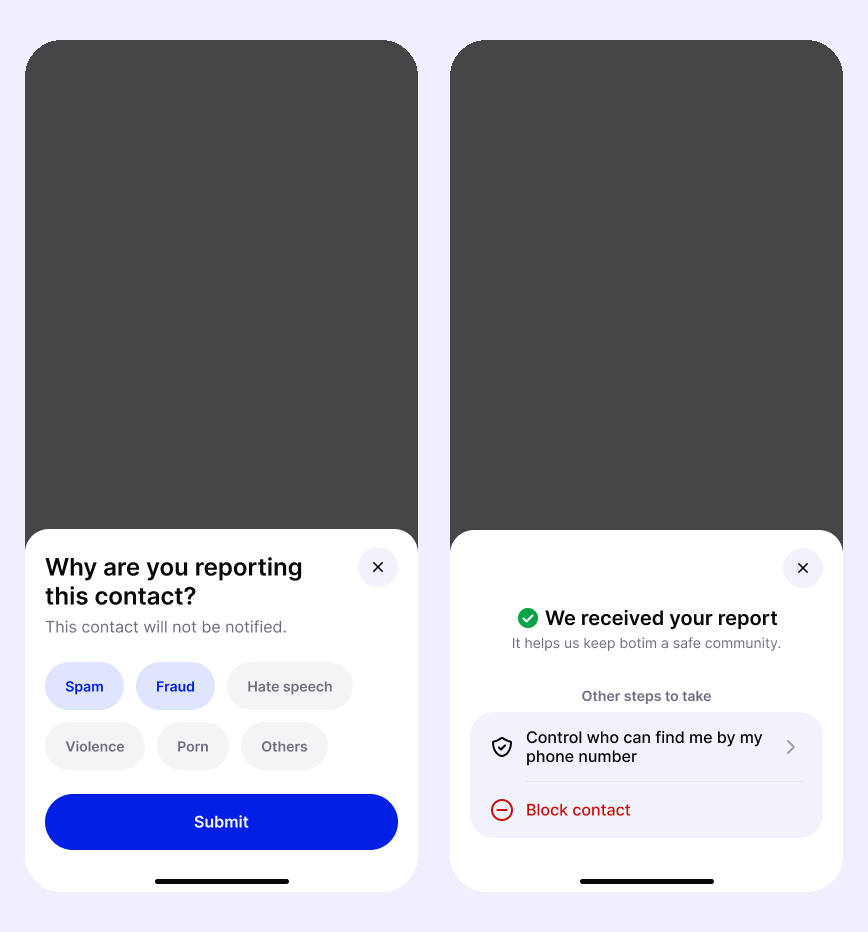
- Designed every screen around the reporter's fear and effort. Report and Block sit in the contact menu in danger red, apart from neutral actions. One tap picks a reason (Spam, Fraud, Hate speech, Violence, Porn, Others), so reports arrive structured for moderation. A single reassurance line, "This contact will not be notified", tackles the fear of retaliation that stops people reporting.
- Made reporting a start, not a dead end. After a report, users can control who finds them by phone number, or block.
- Closed the group loophole. If someone tries to add a person who reported them, or who has privacy settings, that person gets an invitation instead of being added, and the adder never sees who reported them.
- Made enforcement proportional. I built a volume-based, tiered enforcement system for one-to-one and group chats, so repeat offenders face escalating consequences.
- Signalled who to trust. I shipped verified identity and trust indicators so users can tell a real business or contact from an impersonator.
Outcome
- Spam-caller complaints to support dropped 65%, from 3.7 to 1.3 per day.
- Trust & Safety went from ad-hoc tickets to an owned, measurable product area with enforcement, reporting and verified identity in place.
Design
Figma snapshots · Building Trust & Safety from zero